What Do Transcriptionists Do: A Complete Guide
Ever wonder what do transcriptionists do? Discover the essential skills, daily tasks, and career paths in this definitive guide to the transcription profession.
At its most basic level, a transcriptionist is a professional who turns spoken words from audio or video files into a written document. But the job is so much more than just typing. It demands a keen ear, an almost obsessive attention to detail, and a real knack for understanding language, grammar, and context to create a transcript that's both accurate and easy to read.
The Craft of Converting Speech to Text

Think of a transcriptionist as part linguist, part detective. Their main goal is to listen closely to a recording and capture everything—every word, every pause, every "um" and "ah"—with pinpoint accuracy. But it's rarely that simple.
Often, they're working with challenging audio. Imagine trying to decipher a conversation muffled by coffee shop chatter, a conference call where three people are talking at once, or a speaker with a thick, unfamiliar accent. This is the reality of the job.
This is where the real skill comes in. A transcriptionist doesn't just hear the words; they have to interpret them. They use contextual clues to figure out ambiguous phrases and will often pause to research unfamiliar names, technical jargon, or industry-specific terms. This dedication to getting it right is what makes a professional transcript so much more valuable than a raw text file.
A Transcriptionist's Key Responsibilities at a Glance
To give you a clearer picture of what the day-to-day work looks like, let's break down a transcriptionist's core tasks. It's a role that blends sharp listening skills with typing, editing, and even a bit of research.
This table highlights the main duties a transcriptionist handles.
| Responsibility | What It Involves |
|---|---|
| Active Listening | Paying close attention to audio or video, absorbing the full context, including the speaker's tone and intent. |
| Accurate Typing | Swiftly and correctly typing out what is said, aiming to capture every single word just as it was spoken. |
| Proofreading and Editing | Meticulously comparing the finished text against the original audio to hunt down and fix any typos or grammatical slip-ups. |
| Formatting Documents | Arranging the final transcript to meet specific client needs, like adding timestamps, speaker labels, or specific layouts. |
| Researching Terminology | Looking up the correct spelling of names, brands, and technical terms to ensure the document is completely accurate. |
| Ensuring Confidentiality | Handling sensitive and private information with the utmost care. This is a non-negotiable part of the job. For more on our commitment, check out the Typist privacy policy. |
When you boil it all down, a transcriptionist's mission is to create a clean, precise, and coherent written record of a spoken event. While today’s tools can certainly help speed up the process, that human touch is still essential for catching nuance and guaranteeing quality.
Transcribe a 1-hour recording in under 30 seconds
Upload any audio or video file and get a full transcript with timestamps
The Essential Skills of a Modern Transcriptionist
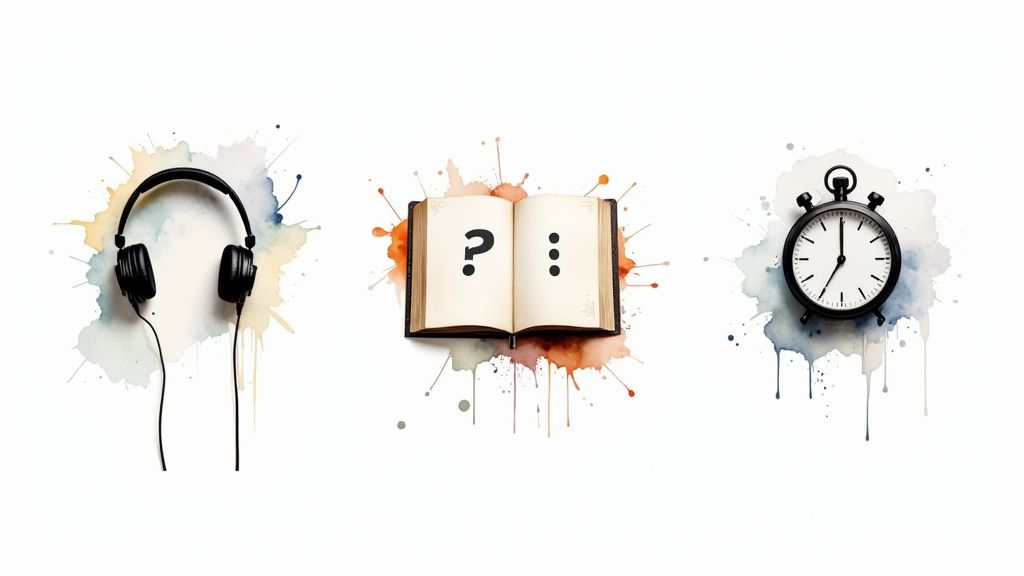
When people think about transcription, they usually jump straight to fast typing. While speed is definitely part of the equation, it’s really just the price of entry. The real art of transcription is a blend of hard and soft skills that transforms spoken words into a document that's accurate, clear, and professional.
At the very top of that list is an exceptional listening ability. We’re not talking about just hearing the words, but actively deciphering them. A seasoned pro can untangle overlapping speakers, make sense of thick accents, and pull out a single quiet word from a noisy background.
That keen ear works directly with a relentless focus on accuracy. For a professional, "close enough" is a failing grade. The industry standard that human transcriptionists strive for is an accuracy rate above 99%. That’s fewer than one mistake for every 100 words, a benchmark that demands incredible concentration.
Beyond Just Listening and Typing
A deep-seated command of the language is absolutely essential. This isn't just about vocabulary; it’s about having a natural feel for grammar, punctuation, and sentence structure. A transcriptionist is constantly making judgment calls—where to put a comma, when to start a new paragraph, and how to break up a long-winded sentence to make it readable.
They also need to be surprisingly good researchers. Think about it. What happens when a speaker mumbles an obscure legal precedent or a technical acronym? The transcriptionist has to hit pause and dig in. Their job involves:
- Verifying Spelling: Double-checking the spelling of every unfamiliar name, product, and piece of jargon.
- Understanding Context: A quick search can clarify an ambiguous phrase and ensure the final text actually makes sense.
- Maintaining Consistency: Ensuring that key terms are spelled and formatted the same way from beginning to end.
A professional transcriptionist is part editor, part fact-checker. Their research skills turn a good transcript into a flawless one, providing a level of quality that automated systems alone cannot match. This human touch is crucial for producing reliable documents.
The Professional Foundation
Finally, a couple of core professional traits are the bedrock of any successful transcription career: solid time management and ironclad confidentiality. Transcriptionists are always juggling multiple projects, each with its own deadline. Staying organized and delivering on time, every time, is non-negotiable.
Even more important is confidentiality. From sensitive corporate strategy meetings to private medical records, transcriptionists are entrusted with highly private information. Clients need absolute confidence that their data is in safe hands.
You can learn more about the habits and practices that define a pro by visiting our Typist blog. It’s this combination of technical talent and professional integrity that makes a great transcriptionist truly valuable.
Start transcribing with Typist →
A Day in the Life of a Transcriptionist
Ever wonder what a transcriptionist actually does all day? It's easy to think it's just a simple case of listening and typing, but that's just scratching the surface. The reality is a carefully structured process designed to deliver a perfectly accurate document, often under a tight deadline. It’s a cycle of prep, focused work, and polish.
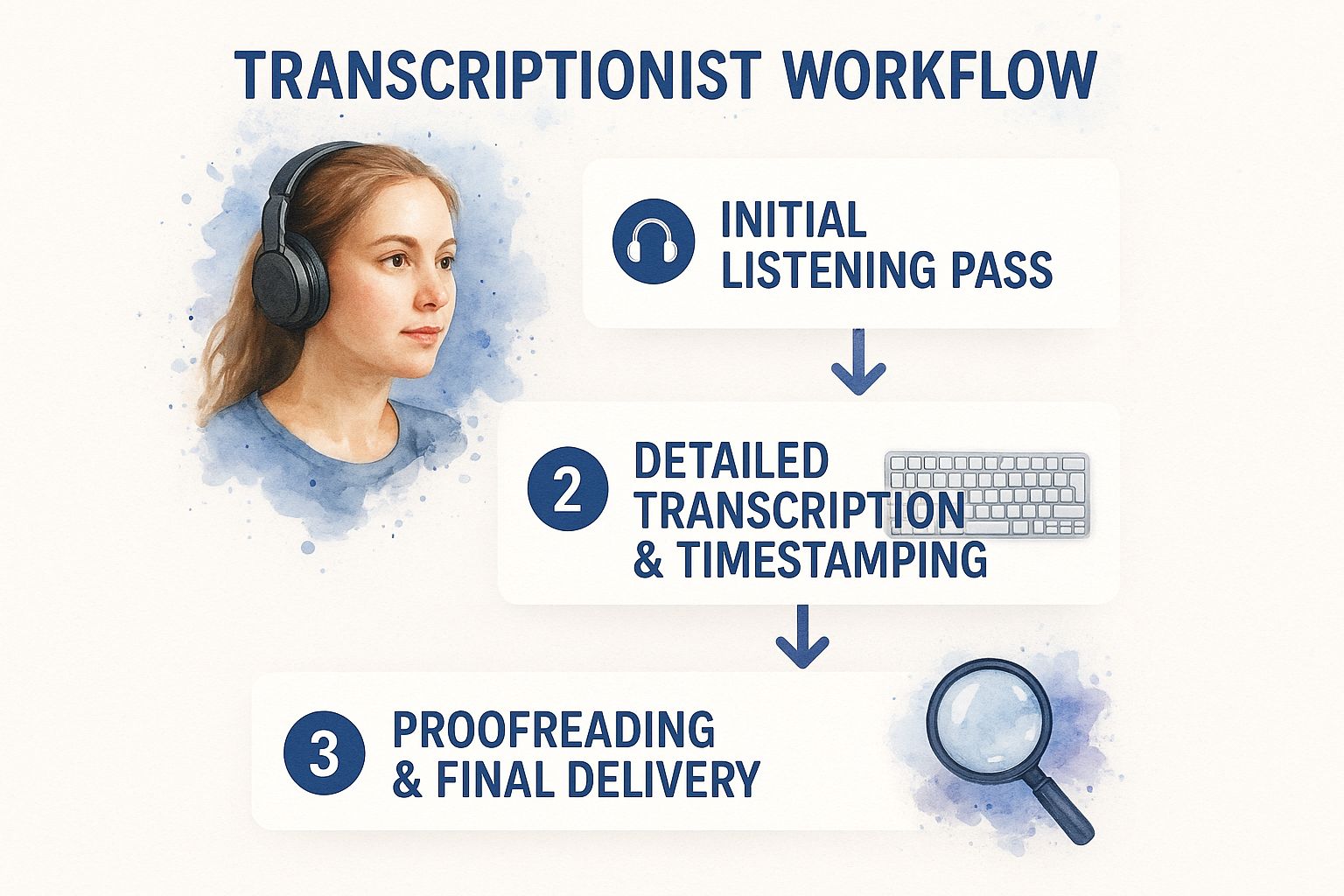
A transcriptionist’s day rarely starts with typing. The first thing they do with a new audio file is just listen. They'll play it all the way through, getting a feel for the content, counting how many people are speaking, and making mental notes of thick accents or tricky jargon. Is there a lot of background noise? Are people talking over each other?
This initial listen-through is a bit like a chef reading a recipe before they start cooking. It helps them anticipate problem spots, look up unfamiliar terms ahead of time, and plan their approach. Getting this prep work done first makes the whole process run much smoother.
From First Draft to Final Polish
Once they've got the lay of the land, the real work begins. This is where a transcriptionist puts their headphones on and dives in, turning spoken words into written text. They'll use special software and often a foot pedal to control the audio—playing, pausing, and rewinding—so they can catch every single word. They also add speaker labels and, if the client asks for it, timestamps.
This part of the job requires serious focus. A pro is aiming for an accuracy rate of over 99%, which means catching mumbled words, figuring out who said what in a fast-paced conversation, and spelling every name and location correctly. This infographic breaks down the typical three-stage workflow that a transcriptionist follows every day.
This methodical approach ensures nothing gets missed. It's all about moving from a big-picture understanding to a perfectly polished final document.
The Crucial Proofreading Stage
The last—and arguably most important—step is proofreading. No transcriptionist worth their salt sends off a first draft. They’ll read the finished text while listening to the audio one final time, hunting for any little errors. A mistyped word, a comma in the wrong place, or a misattributed line can change the meaning entirely.
This final quality check is what separates a professional from an amateur. It's the step where the transcript is polished to perfection, ensuring it is a reliable and accurate representation of the original recording before it's delivered to the client.
After this last check, they format the document to the client's exact needs and send it over, usually via a secure platform. From that first listen to the final delivery, the entire process is a masterclass in discipline and an almost obsessive attention to detail.
Upload MP4 or MOV, export SRT subtitles. Works with Premiere, Final Cut, DaVinci Try it free
Where Transcriptionists Work and Who Needs Them
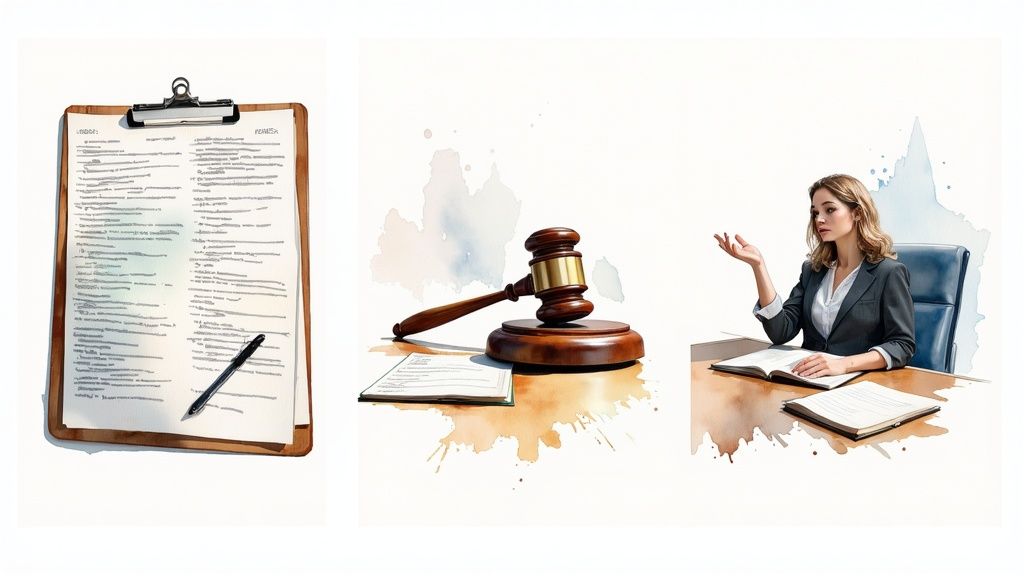
You might be surprised by how many different fields rely on transcription. It’s not a niche service for one or two industries; it's a critical function almost anywhere spoken words carry weight.
From legal proceedings and medical records to academic research and media production, transcriptionists are the ones who capture and preserve important conversations. They create the official record, turning audio into the raw material that fuels decisions, discoveries, and creative content.
High-Stakes Industries
In some professions, a transcript isn't just a document—it's a legally binding record where every single word matters. There’s zero room for error.
- Legal: Imagine a courtroom or a deposition. Lawyers and court reporters need perfect, verbatim transcripts of every statement and testimony. One wrong word could completely change the meaning of a key phrase and potentially alter the outcome of a case.
- Medical: Think about a doctor dictating patient notes after a visit. Those audio files are transcribed to create permanent medical records. Accuracy is everything; it directly impacts patient care and treatment plans.
For professionals in these demanding fields, finding the right help is key. They need specialists who know the specific jargon and formatting inside and out.
Academia, Media, and Beyond
The need for transcription extends far beyond the high-pressure worlds of law and medicine. In education and media, transcription is all about analysis and accessibility.
Researchers in academia, for example, often record hours of interviews or focus groups. Transcribing that audio allows them to carefully analyze the qualitative data, pulling out insights and patterns they'd otherwise miss.
Meanwhile, in the world of content, podcasters and filmmakers turn their audio into transcripts to create show notes, blog posts, and subtitles. This not only makes their content more accessible but also gives it a longer shelf life. This is where modern tools like Typist, with its AI-powered features, have become a huge help in speeding up the process.
The demand for accurate documentation isn’t slowing down. The U.S. transcription market was recently valued at around $30.4 billion and is projected to keep climbing, especially with the boom in remote work and digital content.
This growth highlights just how essential transcription has become. Whether it’s documenting crucial decisions from a corporate board meeting or creating subtitles that share a story with a global audience, the work of a transcriptionist is fundamental to clear communication and accessibility everywhere.
How AI Is Changing the Transcription Profession
Transcription that works in 99+ languages
Accurate results regardless of accent or language — just upload and go
Artificial intelligence isn't here to make transcriptionists obsolete. Quite the opposite—it's making them more powerful than ever. The job is quickly evolving into a smart partnership between human skill and machine speed, completely reshaping the day-to-day workflow.
Think of it this way: instead of painstakingly typing out every single word from scratch, a transcriptionist can now use an AI platform like Typist to get a remarkably accurate first draft in just a few minutes. This initial transcript, often clocking in at over 99% accuracy, takes care of the most grueling part of the job automatically.
This shift frees up the human expert to focus on what they do best: polishing the text to perfection. The role is morphing from pure typist into a more sophisticated editor and quality control specialist.
The Human Touch in an AI World
AI is fantastic at recognizing words, but it can easily miss the subtle, messy, and uniquely human parts of a conversation. This is where a professional transcriptionist’s ear becomes indispensable.
A transcriptionist working with an AI draft focuses on the tricky bits that still need a human brain:
- Sorting Out Speakers: AI often gets tripped up when multiple people are talking, especially with background noise. A person can easily tell who said what.
- Catching Niche Jargon: While AI is smart, it might stumble over highly specific industry terms that an expert in that field would catch instantly.
- Getting the Context Right: People can pick up on sarcasm, tell the difference between homophones (like "their" and "there"), and make sense of ambiguous phrases that would completely stump an algorithm.
This blend of machine speed and human oversight delivers a final transcript that's not only incredibly accurate but also produced in a fraction of the time. We dive deeper into the tech behind this in our article on building the fastest AI audio transcription.
How AI Fuels Growth in Specialized Fields
This combination of AI and human review is especially critical in high-stakes industries. For example, the global medical transcription market continues to grow, thanks in part to the rise of telehealth and the absolute need for perfect records for insurance and legal purposes. The mix of AI's speed and a human's final check for accuracy is the perfect solution for these demanding fields.
This "human-in-the-loop" model is the future of transcription. By letting AI do the heavy lifting, transcriptionists can focus on the nuanced editing and contextual details that ensure a flawless final document. It allows them to handle more projects and deliver even better quality.
Start transcribing with Typist →
Common Questions About a Transcription Career
Thinking about a career in transcription? You probably have a lot of questions. People often wonder about everything from training and pay to what the day-to-day work actually looks like. It’s smart to get a clear picture before you jump in.
This section will tackle some of the most common questions we hear. We'll cover the practical stuff—the qualifications you need, how to find those first few gigs, and what it takes to build a real career in this field.
Do I Need a Specific Degree or Certification?
One of the best things about transcription is how accessible it is. For most jobs, you don't need a formal four-year degree. While some niche areas like medical or legal transcription might require a certification to show you know the lingo, most general transcription roles don't.
What really matters are your skills. No diploma can replace these core abilities:
- Top-notch grammar and punctuation to produce clean, professional documents.
- A strong command of the language you're working in.
- Sharp listening skills to handle different accents, background noise, and tricky audio.
- A serious commitment to accuracy and confidentiality, because clients need to trust you.
Many successful transcriptionists get their start by taking online courses or just practicing on their own to sharpen these skills before they look for paid work.
What Can I Expect to Earn?
How much a transcriptionist makes can really vary. It all depends on your skill level, if you specialize in a certain industry, and whether you're a freelancer or an employee. Beginners usually start with a lower rate per audio hour, but seasoned pros in fields like law or medicine can charge much more.
Let's take a specialized field as an example. In the United States, medical transcriptionists earn a median wage of around $37,550 a year. Even with new technology, thousands of jobs are expected to open up each year as people retire or switch careers. You can learn more from the Bureau of Labor Statistics on this.
For freelancers, your income is all about speed and quality. The more high-quality work you can turn around, the more you earn. This is where modern tools can make a huge difference. Using an AI platform like Typist to get a solid first draft allows a transcriptionist to finish projects way faster, directly boosting their income.
How Do I Find My First Transcription Job?
Getting that first client is usually the toughest part. A great place to start is by building a portfolio. You can practice by transcribing audio that's freely available online, like podcasts or university lectures, to create some solid samples of your work.
Once you've got a few good examples ready, here are a few places to look for jobs:
- Freelance Marketplaces: Websites like Upwork and Fiverr are go-to spots for new transcriptionists to find their first projects.
- Transcription Companies: Lots of agencies hire freelancers on a contract basis. They can provide a steady flow of work, though you might earn a bit less than you would with your own clients.
- Direct Outreach: Don't be afraid to reach out directly to people who might need your services, like podcasters, academic researchers, or marketing agencies.
Make it easy for potential clients to get in touch with you. If you need a hand figuring out how to set up your professional contact info, our team is happy to help if you reach out via the Typist contact page. Ultimately, building a reputation for delivering accurate work on time is what turns those first few jobs into a steady career.
Turn podcast episodes into blog posts Start transcribing